Seasonal Beekeeping
Beekeeping Through the Year
Every beekeeping season is different. Weather, forage, colony strength and location can all influence what is happening inside a hive.
This seasonal guide provides a general overview of the tasks and observations that may be relevant throughout the year. It is intended to help ABKA members plan ahead, recognise important seasonal changes and know when to seek further advice.
Beekeeping is learned through observation, experience and the generous sharing of knowledge. ABKA encourages members to support one another and to develop their skills in a friendly, collaborative and non-competitive environment.
Spring
March to May
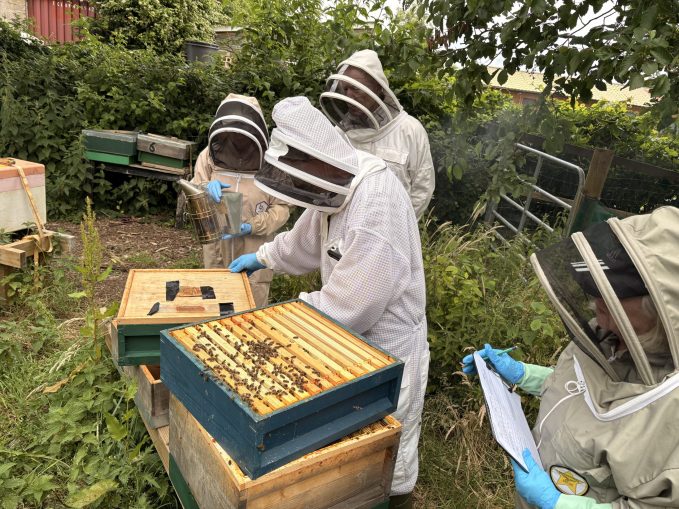
Spring is a period of rapid change. As temperatures rise and forage becomes available, the queen increases her laying and the colony begins to expand.
Early inspections should only be carried out when weather conditions are suitable. Avoid opening a colony unnecessarily during cold, wet or windy conditions.
Things to consider
- Observe hive entrances for signs of activity.
- Check that colonies have sufficient food.
- Watch for bees bringing pollen into the hive.
- Carry out the first full inspection when conditions allow.
- Confirm that the colony is queen-right by looking for eggs, larvae or sealed worker brood.
- Check the condition and pattern of the brood.
- Look for signs of disease or unusual behaviour.
- Replace damaged or unsuitable comb where appropriate.
- Ensure equipment is ready before colonies begin expanding rapidly.
- Add space when the colony requires it.
- Begin regular swarm-prevention inspections as the season progresses.
Spring feeding
Some colonies can become short of food during early spring, particularly during prolonged periods of poor weather. The presence of flowering plants does not always mean that bees are able to forage.
Feed only when necessary and use a feeding method appropriate to the conditions and needs of the colony.
Spring reminder
Avoid expanding the hive faster than the bees can occupy and protect the additional space. Colony strength, rather than the date on the calendar, should guide your decisions.
Early Summer
May to June
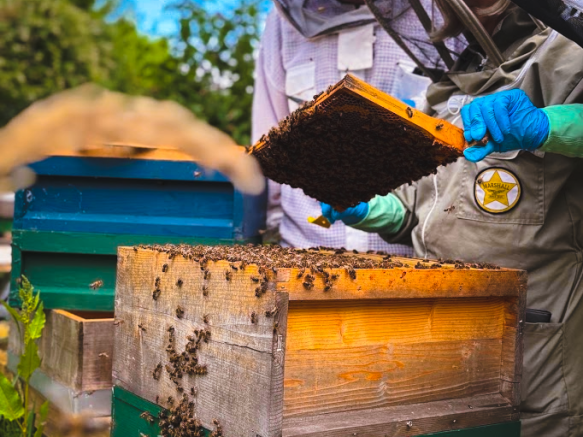
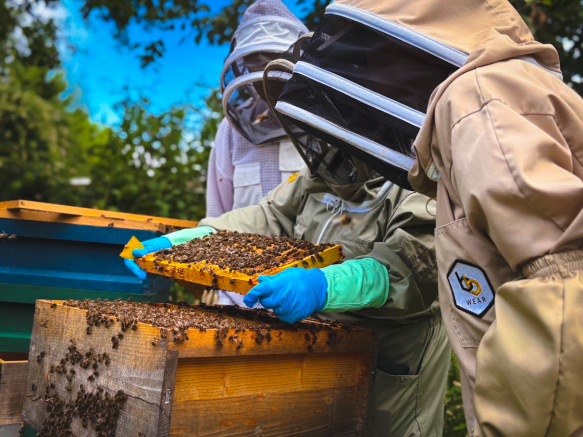
Early summer is usually the period of greatest colony expansion. Strong colonies may grow very quickly and swarm preparation can begin before the beekeeper expects it.
Regular inspections are particularly important during this period.
Things to consider
- Inspect colonies regularly for queen cells.
- Ensure that the queen has sufficient space to lay.
- Provide additional space for nectar storage when required.
- Monitor colony temperament and general health.
- Keep clear and accurate hive records.
- Prepare spare equipment before it is needed.
- Have a swarm-management plan in place.
- Monitor newly created colonies, nucs or artificial swarms carefully.
- Avoid disturbing colonies more than necessary.
Swarm season
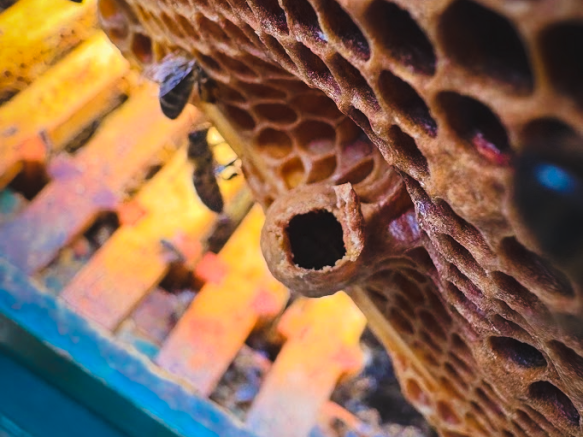
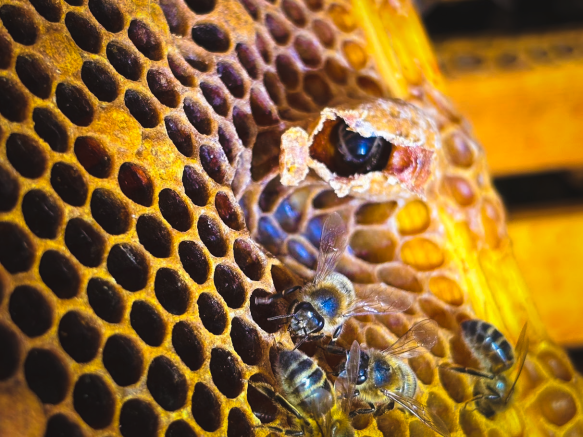
Swarming is the natural way in which honey bee colonies reproduce. Beekeepers should learn to recognise the signs of swarm preparation and understand the difference between play cups, charged queen cells and sealed queen cells.
Finding queen cells does not always require the same response. The condition of the colony, the location and number of cells, the presence of eggs and the age of the queen should all be considered.
Members who are uncertain should seek advice before removing queen cells or making significant changes to the colony.
High Summer
July to August
During high summer, colonies may be at their strongest. Nectar flows can be intense, but they may also stop suddenly depending on weather and local forage.
The beekeeper’s attention begins to move from colony expansion towards honey management, colony health and preparation for the months ahead.
Things to consider
- Continue to monitor available space.
- Check supers regularly during nectar flows.
- Maintain good ventilation without creating excessive draughts.
- Provide a clean water source where appropriate.
- Continue checking brood health and colony condition.
- Watch for robbing, particularly when forage becomes scarce.
- Avoid spilling syrup or leaving exposed honey near the apiary.
- Assess whether colonies have sufficient bees and stores for the coming autumn.
- Begin planning Varroa monitoring and treatment.
- Remove honey only when it is sufficiently ripe.
Honey harvesting
Only remove honey that the colony can spare. Bees require adequate stores for their own survival.
Before extraction, check that the honey is properly ripened. Frames should generally be well capped, although uncapped honey may also be ripe when its moisture content is sufficiently low.
Honey should be removed, transported and extracted using clean, food-safe equipment.
Autumn
August to October
Autumn preparation is one of the most important parts of the beekeeping year. The bees being raised during this period may need to survive through the winter and support the colony until spring.
The aim is to enter winter with a healthy queen-right colony, sufficient stores and suitable protection from pests and weather.
Things to consider
- Complete the main honey harvest promptly.
- Monitor and manage Varroa levels.
- Apply an appropriate authorised treatment where required.
- Follow all product instructions carefully.
- Confirm that the colony is queen-right.
- Assess colony strength and combine weak colonies where appropriate.
- Ensure colonies have sufficient winter stores.
- Feed early enough for bees to process and store the food.
- Reduce hive entrances where necessary.
- Check that roofs, floors and hive components are secure and weatherproof.
- Fit mouse guards at the appropriate time.
- Remove unnecessary empty space from the hive.
- Avoid prolonged inspections as temperatures begin to fall.
Autumn Feeding
Winter stores should be assessed by examining and lifting the hive rather than relying solely on appearance from above.
Colonies should be adequately fed before cold weather arrives. Late feeding can be more difficult for the bees to process and may increase moisture within the hive.
Protecting colony health
Varroa management should not be left until winter. High mite levels during late summer and autumn can affect the health of the bees that must survive through the winter.
Members should maintain treatment records and only use products authorised for use in Ireland.
Winter
November to February
During winter, the colony should generally be disturbed as little as possible. Bees form a cluster and move gradually through their stores.
The beekeeper’s role is mainly to monitor the hive externally, ensure it remains secure and intervene only when necessary.
Things to consider
- Check hives after storms or severe weather.
- Make sure roofs and straps remain secure.
- Keep entrances clear of dead bees, debris or snow.
- Check that ventilation remains adequate.
- Monitor hive weight without opening the colony unnecessarily.
- Provide emergency food if stores become dangerously low.
- Avoid removing frames or breaking the winter cluster.
- Clean, repair and prepare equipment for the coming season.
- Review hive records from the previous year.
- Attend lectures, demonstrations and educational events.
- Plan equipment needs before spring demand begins.
Emergency Winter Feeding
If a colony is at risk of starvation, fondant or another suitable emergency feed may be placed close to the cluster without unnecessarily dismantling the hive.
Liquid syrup is generally unsuitable during cold winter conditions.
Throughout the Year
Good beekeeping is based on observation rather than routine intervention.
At every inspection, consider:
- Does the colony appear queen-right?
- Is brood present and does it look healthy?
- Does the colony have enough food?
- Does it have enough space?
- Are there signs of disease, pests or unusual behaviour?
- Is there anything that requires action now?
- Can the hive be closed without further disturbance?
Keep clear records of inspections, feeding, treatments, queen changes, honey harvesting and any unusual observations.
Native Honeybee Conservation
ABKA supports the conservation and promotion of Ireland’s dark native honey bee, Apis mellifera mellifera.
Members are encouraged to:
- Value and maintain locally adapted native honey bees.
- Avoid unnecessary importation of queens or colonies.
- Support responsible local queen rearing.
- Reduce the risk of spreading pests and disease.
- Maintain good apiary hygiene.
- Treat fellow beekeepers and neighbouring communities with consideration and respect.
Ask for Advice
No beekeeper has every answer, and even experienced beekeepers encounter unfamiliar situations.
Members who are uncertain about colony health, queen status, swarm control, feeding or another issue are encouraged to seek guidance through ABKA’s educational activities, mentoring supports and association apiary.
Advice should support the member in developing their own knowledge and confidence. Mentors and volunteers provide guidance where possible, but they are not an emergency call-out service.
Important Note
This page provides general seasonal guidance only. Local weather, forage, colony condition and individual circumstances must always be considered.
Suspected cases of notifiable disease or invasive pests should be reported through the appropriate official channels. Veterinary medicines and Varroa treatments must be used in accordance with current Irish requirements and the manufacturer’s instructions